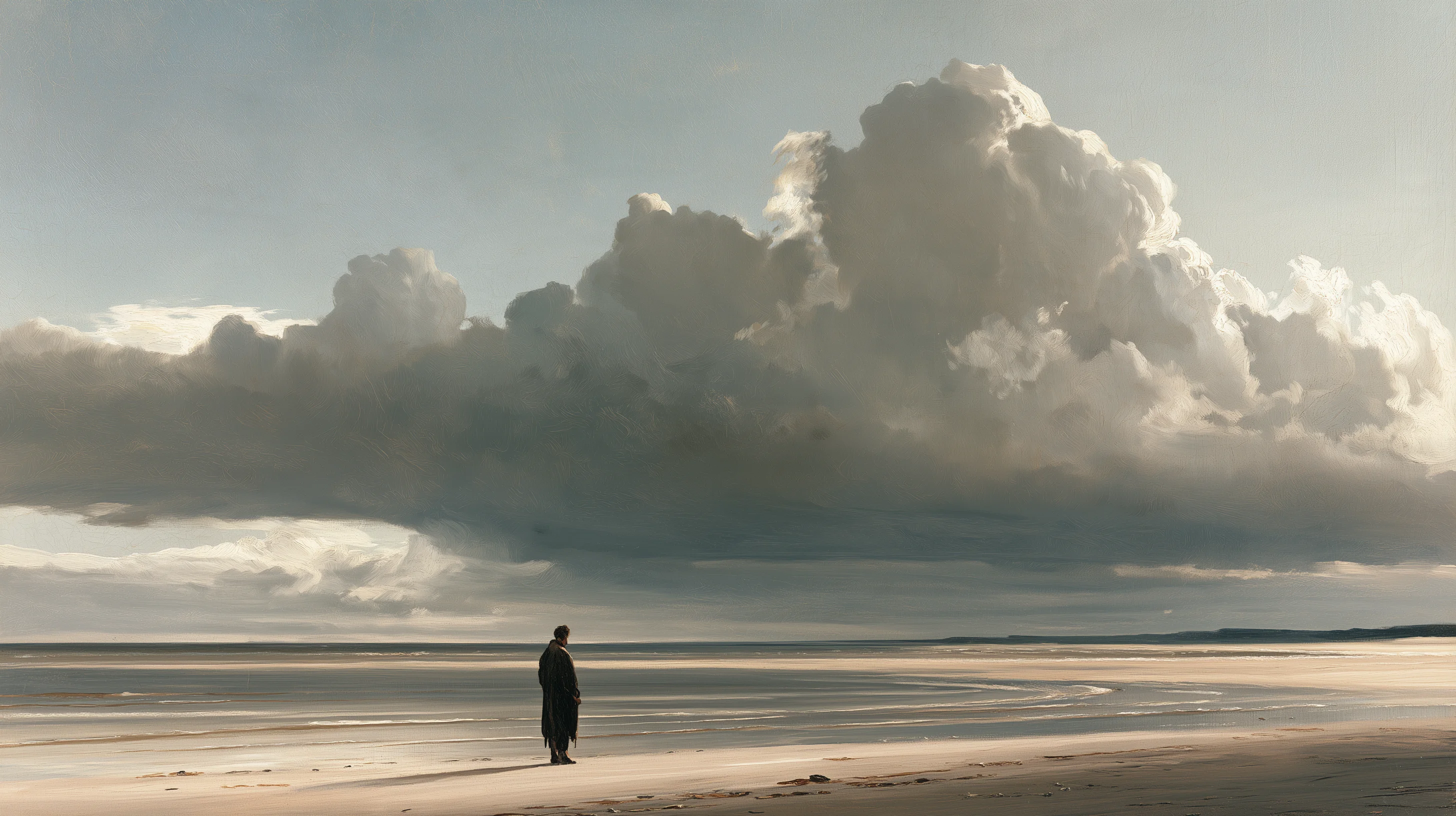
Exhibitions.
Films for announcements, exhibition pages, and digital companion formats.
02 / Art and culture
New visual design or gentle motion can change how we encounter art. It can extend a moment of attention, create atmosphere, or complement an exhibition. Respect for the original is essential.
FILM STUDY 02 / ART AND CULTURE
A cinematic exploration of art. Details, light, and motion reveal a new perspective on the subject.
Why use moving images?
Artworks aren't created to produce as many effects as possible. Carefully chosen movement can nevertheless create another way of engaging with them: a subtle shift in viewpoint, a change in lighting, or a controlled sense of depth.
Such sequences can spark curiosity about the original work. They don't replace the artwork; they provide a distinct medium for announcements, interpretation, and digital presentation.
Image design can also change the atmosphere in which a work is experienced. The important thing is that the original and the interpretation remain distinguishable.
Explore image studiesImage design
For exhibition announcements, catalogs, or digital editions, sensitive image editing may be enough. A different crop, an extended frame, or a new visual mood can work when it respects the artist's intent.
A free interpretation and a faithful reproduction remain deliberately different tasks.
Case study / Art and craft
A needle-felted weasel, made by an artist. A simple photograph becomes a new visual setting, then a short cinematic story. Throughout, the figure remains recognizably handmade.
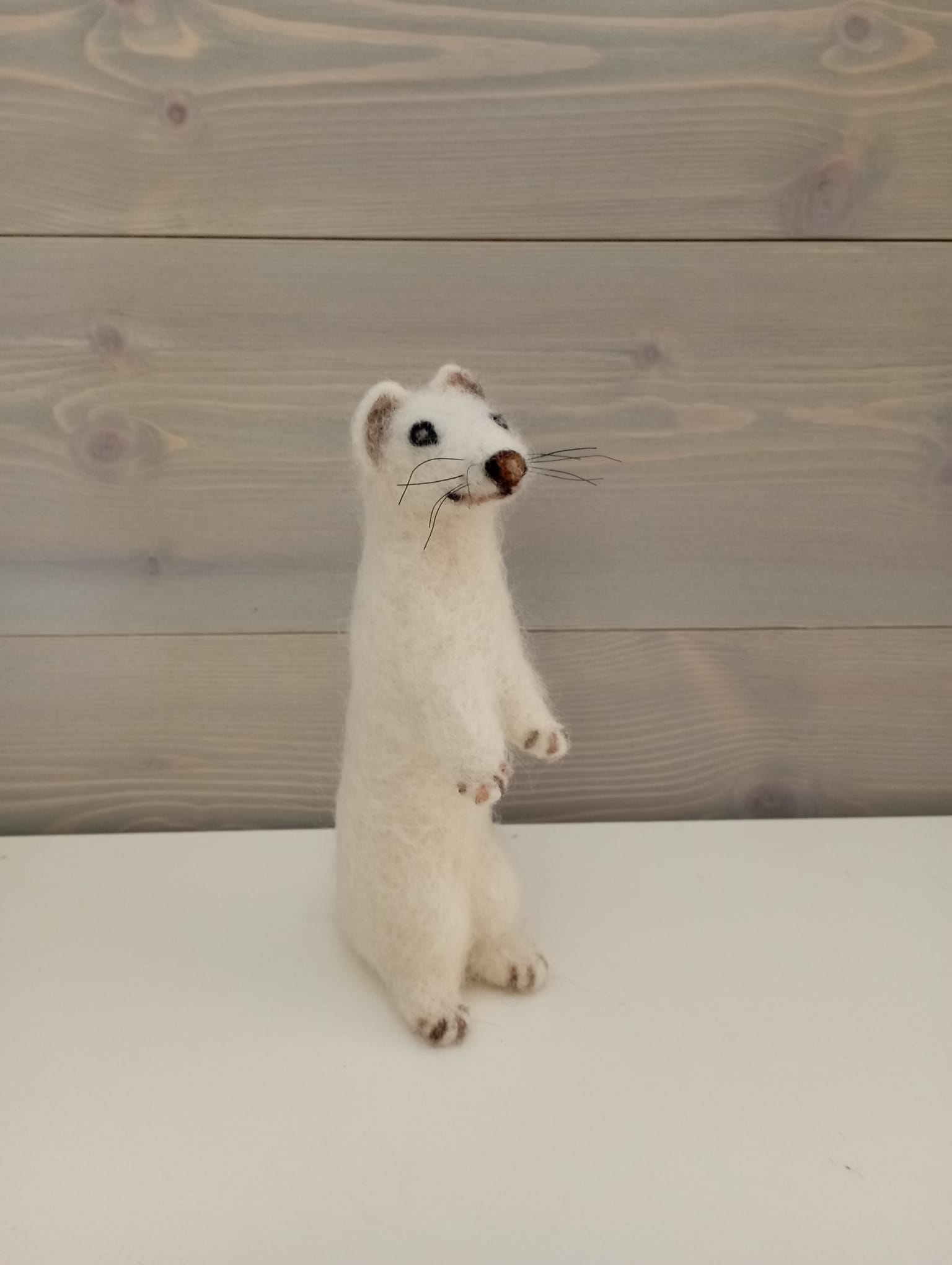
A handmade felt figure, photographed against a simple background.
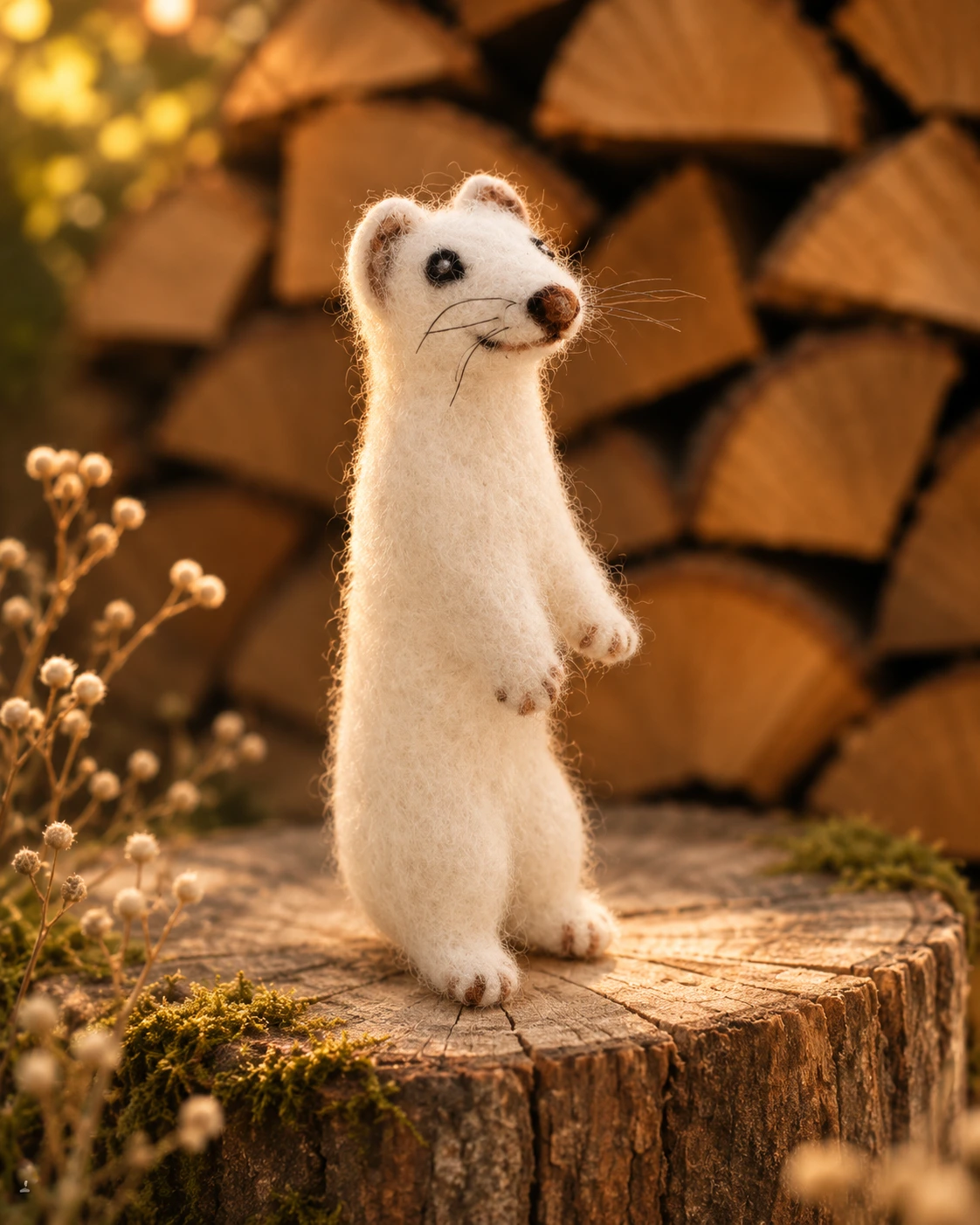
Warmly lit in front of a stack of firewood, preserving the material, expression, and handmade details.
The weasel comes to life and disappears between the logs.
Original figure handmade by the artist. Image refinement and digital film design: vermonta.design. The new setting is a creative interpretation, not a documentary photograph of the artwork.
Possible applications
Films for announcements, exhibition pages, and digital companion formats.
A moving perspective on individual works, portfolios, or editions.
Thoughtful adaptation of book illustrations, historical prints, literary imagery, and cultural subjects for digital formats.
Literature and the humanities
Historical book illustrations, prints, drawings, and imagery from literature and the humanities can have a distinct visual language. Thoughtful image design or a short movement can build on that language without obscuring it with effects.
This can serve libraries, publishers, literary events, digital editions, and cultural projects: as an introduction to a text, a way into an illustration, or a means of presenting historical context.
Here, too, the visual interpretation supports engagement with the original. It replaces neither the text nor its historical or cultural setting.
A carefully chosen crop or very slow movement can draw attention to details.
Gentle shifts in light, where the subject allows and the artistic intent is respected.
A more distinct visual interpretation, clearly identified and agreed upon with those responsible.
A short film as an introduction to an exhibition or cultural theme.
Artistic care
Generative methods can introduce extra shapes, unwanted details, or inappropriate movement. Especially in art, such changes are not automatically desirable.
That's why we agree in advance on what must remain unchanged and how far an interpretation may go. Image rights and permission from the relevant rights holders or institutions must be established for the intended use.
And sometimes the best decision is not to animate an image at all.
It's not the motion that should impress, but the artwork it allows us to see differently.
Whether you have an existing artwork, an exhibition, or a new cultural idea, we'll discuss an appropriate image or film. For existing works, the original and its rights remain central.
Discuss a project